Our verdict
Is an Addis Ababa cultural show worth it?
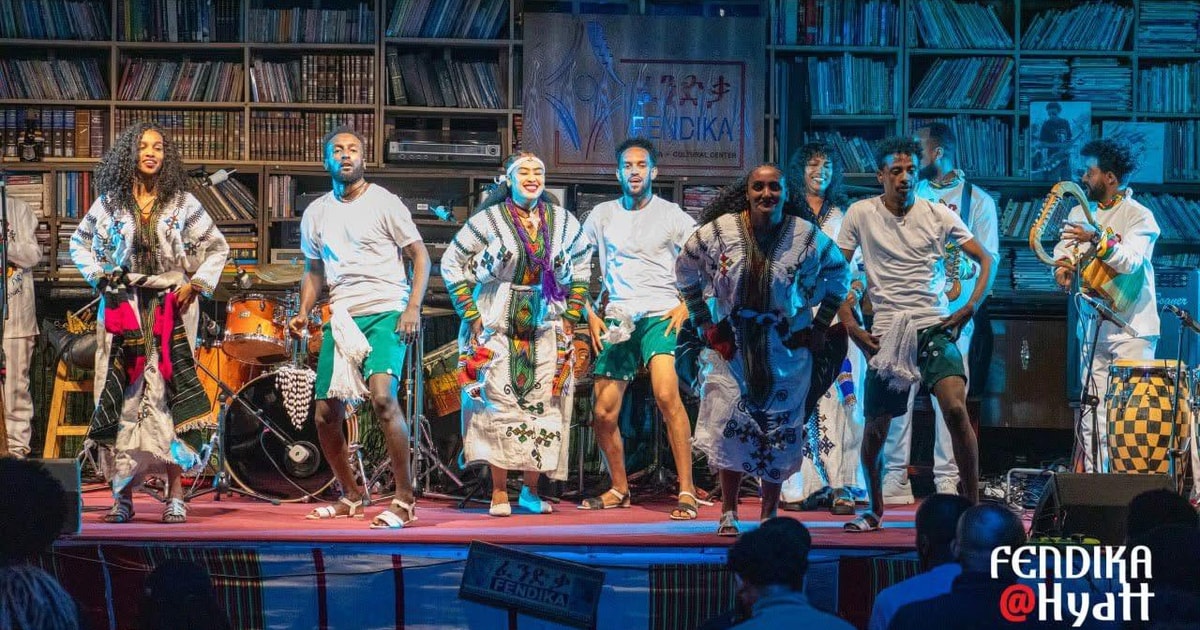
Yes. In about three and a half hours you see dancers from different Ethiopian regions perform to live masenqo, krar and kebero at Fendika or Yod Abyssinia, sit through a coffee ceremony with a taste of tej and araki, and on a weeknight move on to a live Ethio-jazz room. A guide collects you, explains what each dance means and takes you home. Guests rate it 4.8 out of 5, and you can cancel at no charge up to 24 hours ahead.
What makes the evening worth the drive
Many regions, one stage
The listing promises steps from across Ethiopia, from the shoulder-shaking eskista of the Amhara to the rhythmic moves of the Gurage.
Strings and drums played live
Each set is accompanied live on the one-stringed masenqo, the krar lyre and the kebero drum, the instruments of Ethiopia's azmari singers.
The coffee comes to you
The coffee ceremony is in the price, along with tastings of tej, the honey wine, and araki.
A jazz room most nights
From Monday to Friday the evening carries on to live jazz at Fendika or at the African Jazz Village that Mulatu Astatke founded.
Nobody needs a map
Transfers from your accommodation and back are included, and the guide finds your seats and helps you order.
Book
The cultural show with jazz, two other dance evenings and three days out
The guided show-and-jazz evening is first. Next come two other ways to see Ethiopian dance in Addis Ababa, then three daytime outings for the rest of your stay.
-
Cultural show and Ethio-jazz with transfers
Dances from across Ethiopia to live masenqo, krar and kebero, a coffee ceremony with tastings of tej and araki, then a live jazz room on weeknights. Three and a half hours, guided in English.
Check dates ↗ -
Fendika coffee and dance evening, private
Just your party and a driver-guide: Meskel Square, then traditional music, dance and a coffee ceremony at Fendika, and the National Museum if time allows. The listing suggests it for layovers.
Check dates ↗ -
Totot feast and rhythm show with dinner
Dinner of injera, doro wat and tibs at Totot's traditional food hall in Gerji while singers and dancers perform, with a coffee ceremony and a taste of tej.
Check dates ↗ -
Addis Ababa city day tour
The National Museum, the Mercato market, Bata Mariam church, a coffee stop and a drive up Mount Entoto, timed for a short stay or a layover.
Check dates ↗ -
Museum, Mercato and coffee ceremony
A shorter half-day with a local guide: the National Museum, the stalls of the Mercato and a coffee ceremony to finish.
Check dates ↗ -
Mount Entoto hike, injera and hyenas
Forest paths above the city on Mount Entoto, a go at baking injera, a coffee ceremony and wild hyenas in their natural habitat.
Check dates ↗
More to book in Addis Ababa
On the stage
What you will see and hear on stage
Ten short notes on the dances, the instruments and the house where the evening's music grew up, so the show makes sense as it happens.
- Amhara
Eskista, the shoulder dance
Wikipedia gives the name as Amharic for dancing shoulders. Shoulders, chest, head and neck move in quick bursts while the feet barely shift, and at weddings admirers press money onto the best dancer's forehead.
- Gurage
Acrobatic and fast
The listing names Gurage moves as one of the night's dances. Wikipedia's article on Ethiopian music describes the Gurage dance as acrobatic, asking for tight coordination of arms, legs and body.
- Tigray
Circles and shoulders
Dancers from the north travel in a smooth circle, with the weight in shoulder and neck movement, a style Wikipedia links to the shim-shim of Eritrea.
- Oromo
Jumps and the whole body
Oromo dances, from Oromia, the largest region, use jumps and full-body movement. In the Shewa Oromo style, Wikipedia notes shell-decorated leather costumes for women and a mane-like fur headdress and sticks for men.
- The south
Hips and a quick beat
Peoples of the south such as the Welayita, Kenbata and Sidama dance with the hips to fast, rhythmic drumming, and these dances are popular across the country.
- Masenqo
One string, many voices
A bowed lute with a single horsehair string over a diamond or square box covered in hide. The booking page spells it masinko. Players tune it to their own singing voice.
- Krar
The five- or six-string lyre
A bowl-shaped lyre tuned to a five-note scale, plucked or strummed, and often amplified on modern stages. It is one of the most widespread instruments of northern Ethiopia.
- Kebero
The double-headed drum
A conical drum with a hide at each end, one tuned higher than the other. Large keberos sound in Orthodox church music; smaller ones drive weddings and dances.
- Azmari
Singers who improvise
Azmaris sing verses made up on the spot, praise or teasing, to their own masenqo or krar. They are first documented in the fifteenth century and still play in bars and at weddings.
- Fendika
From tavern to cultural centre
Wikipedia tells how the dancer Melaku Belay danced for tips at an azmari bet in Kazanchis, slept under its bar, and later bought it. Fendika is Amharic for Exult.
Drawn from the booking page and the English-language Wikipedia articles on eskista, the music of Ethiopia, the masenqo, the krar, the kebero, the azmari and Fendika.
Three evenings
Which cultural evening: show with jazz, coffee ceremony evening or Totot feast?
All three are sold by the same Addis Ababa tour company, with free cancellation and transfers. They differ in where the dancing happens, whether dinner is part of the price and whether jazz follows.
Read on the booking page
What the show-and-jazz evening includes
Copied from the listing on 27 November 2026. Where your booking page now says something else, follow the booking page.
In the price
- Transfers from your accommodation and back
- Entry to the cultural show (Fendika or Yod Abyssinia; Totot is also listed)
- A coffee ceremony
- Entry to the jazz venue
- A local nightlife guide
- Air-conditioned transport
- A tasting of tej and a tasting of araki
- Dances from several Ethiopian peoples
Not in the price
- Alcoholic drinks and cocktails beyond the tastings
- Dinner, offered as an optional add-on
- Live jazz on Saturdays and Sundays, when a cultural live music show can be arranged instead
- Length
- Three and a half hours.
- Guide
- A live guide speaking English.
- Booking
- Cancel at no cost until a day ahead; hold now and pay nearer the date; bookings close 30 minutes before the start.
- Joining in
- You may join the dancers on stage for a moment if you want to. It is optional.
Lowest starting price shown on 27 November 2026; your total for the evening appears at checkout.
How the night runs
From your door to the last set
Choose a weeknight
Monday to Friday brings the jazz half. Hold the date with pay later while your flights settle.
Get collected
The guide and an air-conditioned car pick you up and tell the story of Ethiopian dance and of Fendika on the way.
Show, coffee, tasting
Watch the regional dances, take your cups of coffee and try tej and araki. Step on stage only if you want to.
Jazz, then home
Move on to Fendika's jazz session or the African Jazz Village, then ride back to where you are staying.
Guides
Six guides: dances, Ethio-jazz, coffee and planning
- The answer, sourced Is an Addis Ababa cultural show worth it? The dance-and-jazz evening, step by step What the guided evening at Fendika or Yod Abyssinia shows you, which nights carry on to Ethio-jazz, what you drink and eat, and who should book it. Open this guide →
- The comparison Which cultural evening in Addis Ababa: show with jazz, the Fendika coffee evening or the Totot feast? Three evenings of Ethiopian dance sold by the same company, compared point by point: where the dancing is, what you eat and drink, how long it takes and which traveller each one suits. Open this guide →
- The dances Eskista, Gurage, Tigray and Oromo dances: what you see at an Addis Ababa cultural show A short field guide to the regional dances on the cultural show stage, the costumes, and the custom of rewarding a good dancer. Open this guide →
- The jazz Ethio-jazz nights in Addis Ababa: Fendika's sessions and the African Jazz Village Where Ethio-jazz came from, who Mulatu Astatke is, and which of the two jazz rooms you reach on which night of the cultural show evening. Open this guide →
- Coffee, honey wine, bread The coffee ceremony, tej and injera: what you taste at an Addis Ababa cultural show How the Ethiopian coffee ceremony works, what tej and araki are on the show-and-jazz evening, and where injera comes in. Open this guide →
- Practical Before you book the Addis Ababa cultural show: days, transfers, food and cancelling Days, transfers, extras and cancelling, gathered from the listing: which days carry jazz, what the transfers cover, what costs extra and how cancelling works. Open this guide →
Before you book an evening of Ethiopian dance and jazz
Is an Addis Ababa cultural show worth it?
Yes. You see dances from several Ethiopian regions performed to live masenqo, krar and kebero at Fendika or Yod Abyssinia, take part in a coffee ceremony with tastings of tej and araki, and on weeknights go on to live Ethio-jazz. Transfers and an English-speaking guide are included, it holds a 4.8 rating from its guests, and a cancellation costs nothing until 24 hours ahead.
Which cultural evening should I book?
Book the show-and-jazz evening if you want dance and live jazz in one night. Choose the Totot feast if you want dinner included with the show, or the private Fendika coffee evening if you are on a layover. You will find all three under Book on the home page.
Which days have jazz?
Monday to Friday. The listing gives Fendika's jazz sessions on Mondays, Tuesdays and Wednesdays and the African Jazz Village on Mondays, Thursdays and Fridays. On Saturdays and Sundays there is no jazz night, and the booking page says a cultural live music show can be arranged instead.
Where does the show take place?
The listing names Fendika Cultural Center or Yod Abyssinia for the cultural show, and lists Totot among the shows it can include. The jazz is at Fendika or at the African Jazz Village in the grounds of the Ghion Hotel. The guide takes you between them.
How long is the evening?
Plan on three and a half hours, pick-up to drop-off. The booking calendar shows each date's start time.
What is included?
Transfers in an air-conditioned vehicle, a local guide, entry to the cultural show and to the jazz venue, a coffee ceremony, and tastings of tej and araki. Other alcoholic drinks, cocktails and dinner are extra; dinner is offered as an optional add-on.
Is dinner part of the show-and-jazz evening?
No. The listing offers dinner as an optional add-on. If you want a full Ethiopian meal during the show, the Totot feast includes injera, doro wat and tibs, with vegetarian and vegan food listed.
Will I have to dance?
No. The listing says you can join the dancers for a moment if you like, and calls it optional.
What language is the guide?
English. The guide explains the dances and the music, helps you find a good seat at the jazz venue and helps you order a drink if you want one.
Can I cancel or pay later?
Yes to both. A cancellation made 24 hours or more before the start is refunded in full, and nothing is charged when you hold the date. Bookings close half an hour before the start.
What is Ethio-jazz?
A blend of Ethiopian melodies built on five-note scales with jazz harmony and instruments. Wikipedia traces it to the 1950s and calls Mulatu Astatke its father; the African Jazz Village, one of the evening's two jazz rooms, is the club he founded.
Is there an evening for a layover?
The private Fendika coffee and dance evening is the one the booking page recommends for travellers with a layover. Its length is flexible, it can begin or end with an airport transfer, and its booking page offers a stop at the National Museum when your timings and the museum's opening hours allow.